
Every day, community cats live alongside us in neighborhoods, apartment complexes, businesses, parks, and rural areas. Many are healthy and thriving outdoors, but without spay/neuter services, outdoor cat populations can grow quickly, leading to suffering for cats, frustration for residents, and strain on shelters. CAA’s Trap–Neuter–Return (TNR) program is the humane, effective solution.
Since 2015, CAA has sterilized and vaccinated THOUSANDS of community cats through our TNR program. The majority of healthy outdoor cats brought to CAA are enrolled in TNR, allowing us to protect shelter space for cats who truly need indoor placement while maintaining a cat save rate above 95%!
TNR is the only proven long-term method for reducing community cat populations. To learn more, click here.
CAA TNR Services
Companion Animal Alliance offers two ways to participate in our Trap-Neuter-Return (TNR) program, depending on your needs and experience.
Option 1: Trap the Cat Yourself
If you're comfortable trapping community cats on your own, you can:
Borrow a humane trap from East Baton Rouge Animal Control (call 225-774-7700)
Schedule an intake appointment with Companion Animal Alliance before setting the trap.
Trap the cat and bring them to your scheduled appointment.
This option is best for: Residents managing one or a few community cats who are comfortable trapping independently.
If you're new to trapping, check out this video from the Alley Cat Allies for a step-by-step guide to TNR.
Option 2: Work with the Feral Cat Coalition
CAA’s Feral Cat Coalition is a volunteer-based network of experienced trappers and colony caretakers.
Our Feral Cat Coalition regularly coordinates TNR Sundays, during which CAA provides spay/neuter surgeries and vaccinations for up to 80 community cats each month.
This option is best for:
Large cat colonies
Cats that are difficult to trap
Residents who need assistance trapping community cats
Please note that volunteer assistance is based on availability and may involve a waiting list.
To request assistance, please email feralcats@caabr.org or visit the Feral Cat Coalition webpage for more information.
How TNR Works
TNR is an acronym meaning TRAP, NEUTER, RETURN.
TRAP
Community cats are humanely trapped by members of the public, colony caretakers, volunteers, or animal control officers and brought to CAA.
NEUTER
Cats are sedated for their spay/neuter surgery, surgically sterilized, FVRCP & Rabies vaccinated, and ear-tipped.
RETURN
Once recovered, cats are returned to the area where they were trapped.
Returning cats to their outdoor home is critical. Community cats know where to find food, water, and shelter in their territory. Removing them permanently creates a “vacuum effect,” where new unsterilized cats move into the now-empty area and continue reproducing. The population will grow until it reaches the carrying capacity of the local environment. In other words, if an area can support 10 cats, there will be 10 cats, either by new litters being born or new cats moving in. The only way to stop this growth is to prevent new litters, sterilize the cats in the area and surrounding areas, and reduce the carrying capacity of the area.
TNR stabilizes colonies, prevents new litters, reduces nuisance behaviors associated with mating, and improves quality of life for cats and people alike.
TNR Works Because It:
Stops reproduction
Stabilizes colony populations
Reduces fighting, spraying, yowling, and roaming
Prevents new kittens from being born outdoors
Protects shelter space for adoptable and medically needy cats
Reduces intake and euthanasia rates community-wide
Removing Cats Does Not Work
When cats are removed from an area, other cats move into the available territory and food source. This is called the vacuum effect. The cycle of reproduction then begins again.
A sterilized cat guarding territory is one of the best deterrents against new unsterilized cats moving in.
Don’t want cats hanging around your property? Humane deterrents are the most effective approach.
Helpful Tips
Do not leave food outdoors overnight
Feed outdoor pets on a schedule and pick up bowls after 30 minutes
Secure trash and compost
Block access to crawlspaces and hiding spots
Use humane deterrents such as motion sprinklers, scent deterrents, or texture barriers
A stable, sterilized colony also helps prevent new cats from moving into the area.
Community cat FAQs
What are community cats?
Community cats are outdoor cats who do not have a clear owner. Some are feral and avoid people, while others are social and friendly. Many were born outdoors from unsterilized pet cats and their descendants.
Community cats are part of the larger Pet overpopulation crisis. Without intervention, colonies continue to grow as kittens mature and reproduce.
Why spay/neuter matters:
An unspayed female cat can have up to three litters per year, with kittens capable of reproducing as young as four months old.
Only a fraction of kittens born outdoors survive. Those that do often face disease, injury, parasites, starvation, and exposure.
Every cat sterilized through TNR prevents future litters and reduces suffering for generations of cats to come.
Why should I allow a cat to come back to my property?
Because the cat is already part of the environment there.
Community cats establish territories around reliable food, water, and shelter sources. Removing cats from an area does not make the area “cat-free” long-term. Instead, new unsterilized cats often move in to take advantage of the same resources — a phenomenon known as the vacuum effect.
A sterilized cat:
Cannot produce kittens
Helps prevent new cats from moving into the territory
Is generally quieter and less likely to roam, fight, or spray
Has been vaccinated against rabies
Allowing a sterilized community cat to remain is one of the most effective ways to stabilize the population and prevent future litters.
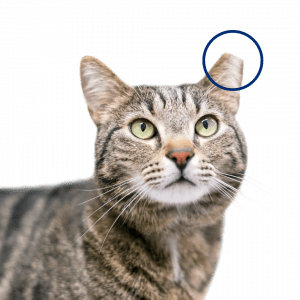
Does ear-tipping hurt?
Ear-tipping is performed while the cat is under anesthesia during spay/neuter surgery.
The procedure removes a small portion of the tip of the left ear and heals quickly. Ear-tipping is the internationally recognized sign that a community cat has already been sterilized and vaccinated.
This helps prevent cats from being trapped and undergoing unnecessary surgery more than once.
why return?
Many people assume that outdoor cats should simply be removed or relocated. In reality, relocation and euthanasia do not solve community cat issues long-term.
why return friendly cats?
Not every friendly cat outdoors is lost, abandoned, or suited for indoor life. Some friendly community cats:
Have outdoor caretakers
Have lived outdoors long-term
Are semi-socialized and struggle indoors
Thrive in familiar outdoor environments
Returning healthy outdoor cats after sterilization prevents overcrowding in shelters and allows resources to remain available for cats who are injured, sick, young, or truly homeless.
When friendly cats are suitable for adoption and shelter resources allow, CAA evaluates them individually.
Why not just remove the cats?
Removing community cats does not solve the underlying issue.
As long as food sources and shelter remain available, new cats will move into the area and continue reproducing. This cycle repeats unless the cats are sterilized.
TNR is the only proven humane and effective long-term method for reducing community cat populations.
Is TNR safe for wildlife?
TNR helps reduce future outdoor cat populations over time by preventing new litters from being born. Both cat and wildlife lovers can agree on one thing: fewer cats outside is a good goal!
CAA encourages responsible colony management practices, including:
Sterilization of all cats in a colony
Managed feeding schedules
Monitoring colony health
Preventing abandonment of pet cats outdoors
Reducing reproduction through TNR is the most effective humane strategy currently available for long-term population reduction.